
The biggest hurdle in the adult gaming world isn’t finding content; it is avoiding the friction of hidden payment walls. Many platforms claim to be free only to stop you at the most interesting moment, demanding a credit card for age verification or access. If you want to avoid sharing your financial details, you need to look for specific distribution models that prioritize user privacy and direct accessibility.
Choosing a game that requires no credit card is usually a choice between smaller, high-speed browser experiences and larger, community-funded projects. By understanding how different developers fund their work, you can skip the data-hungry portals and focus on games that are truly available for immediate play.
Prioritize community-funded and DRM-free projects
Choose indie titles funded via platforms like Patreon or SubscribeStar if you want full-scale narratives and high-fidelity art. Most serious developers in this niche build their games to be played offline. They release free versions of their builds to the public to gain traction, relying on voluntary donations rather than mandatory paywalls. These games are almost always DRM-free, meaning once you have the file, there is no verification system or credit card check standing between you and the content.
Skip any site that asks for a card to verify your age if they don’t offer an alternative, non-financial method. Legitimate developers who want to reach a wide audience often use third-party repositories that host the files directly. If a platform is more interested in your billing address than your feedback on the gameplay, it is likely a data-harvesting trap rather than a genuine gaming destination.
Match the platform to your desired interaction level
Look for HTML5 portals if you prefer 2D art and quick sessions. These sites host thousands of games that run directly in your browser. Because the overhead for these games is low, developers often monetize through simple onsite ads rather than account-based subscriptions. This is the best route for puzzle games, simple management sims, and short-form visual novels where you don’t need to save your progress over several weeks.
Decide on standalone PC downloads if you want 3D animation or complex RPG mechanics. Larger games rarely perform well in a browser, and the developers behind them usually prefer you to have the full assets on your machine. This method is the safest for privacy-conscious players, as it eliminates the need for a persistent connection to a server that might be tracking your session data or asking for recurring authentication.
Avoid common traps and forced verification
The most important distinction to make is between a game that is free and a platform that is a funnel. Many sites act as a gallery for games but lock the actual play button behind a credit card check. Genuine no-card games will never ask for financial details during the boot-up or installation process. If you encounter a pop-up that claims a card is only needed to prove you are an adult, it is usually better to find a mirror of that game on a more reputable developer hub.
Stick to projects with active communities and transparent update logs. Games that have been in development for years and have a visible following are far more likely to respect the no-credit-card rule. These developers understand that their reputation is their most valuable asset, and they won’t risk it by baiting users into suspicious verification schemes.
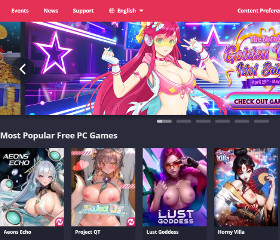 Nutaku
 AI Adult Games
 Girlvania
 Life Selector
 3D SexVilla 2
 VR Fuck Babes
 Try not to cum
 Pirate Jessica
 City of Sin 3D
 SimSexFamily
 City of Sin 3D
 Nutaku
 Try not to cum
 My 3D Girlfriends
 VirtualLust3D
 CandyAI